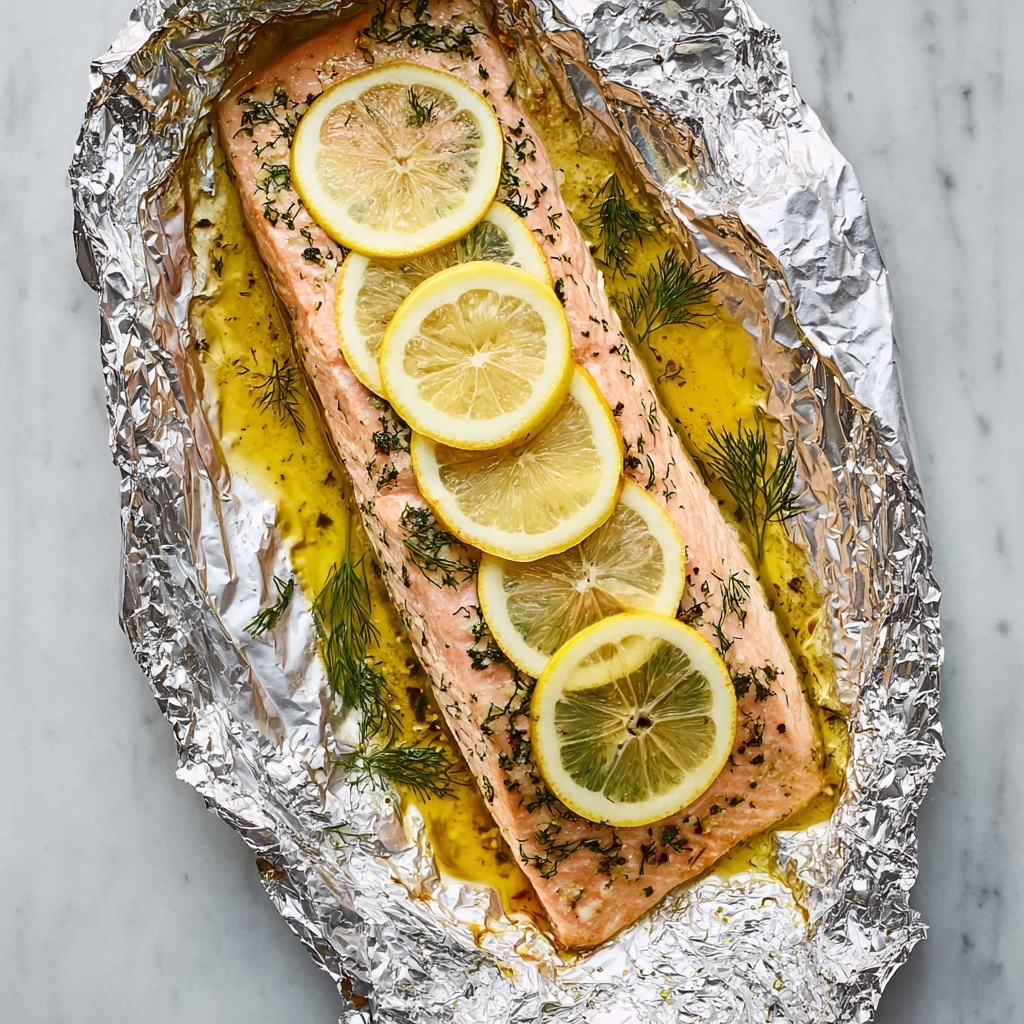
If you are looking for a simple, succulent way to prepare fish that bursts with flavor and locks in moisture, this Salmon in Foil Recipe is an absolute game-changer. The method steams the fish gently in its own juices along with fresh herbs, garlic, and lemon, creating a tender, flaky, and aromatic dish that feels both elegant and effortless. Whether you’re cooking for a busy weeknight dinner or a special occasion, this recipe delivers consistently delicious results with minimal fuss.
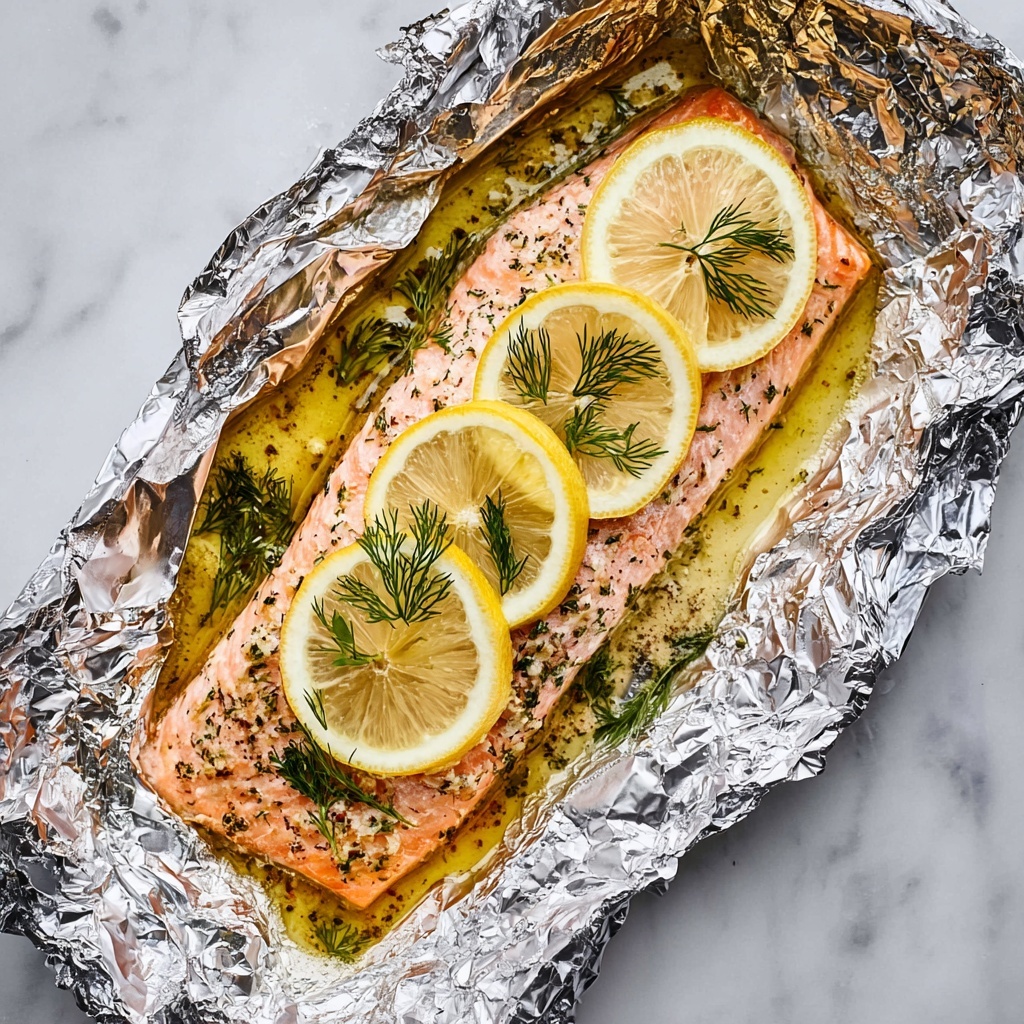
Ingredients You’ll Need
These ingredients are straightforward yet fundamental to crafting the perfect Salmon in Foil Recipe. Each contributes essential flavors or textures that enhance the fish, making every bite vibrant and well-balanced.
- 1 1/2 pounds sockeye salmon: A rich and flavorful fish that holds up beautifully during cooking.
- 3 tablespoons olive oil: Adds a smooth, fruity note and helps keep the salmon moist.
- 1 tablespoon lemon juice: Brings brightness and a fresh tang to balance the richness.
- 2 garlic cloves, minced: Infuses the fish with warm, aromatic depth.
- 1 teaspoon dried parsley flakes: Offers a subtle herbaceous touch without overpowering.
- 1/2 teaspoon sea salt: Enhances all the natural flavors perfectly.
- 1/2 teaspoon ground black pepper: Adds a hint of sharpness and spice.
- 1/4 teaspoon crushed red pepper flakes: Optional, but introduces a gentle kick for spice lovers.
- 1/2 lemon, thinly sliced: Used on top to infuse the fish with delicate citrus oils during baking.
- 1 tablespoon fresh dill (optional): A fragrant herb that complements salmon beautifully when sprinkled at the end.
How to Make Salmon in Foil Recipe
Step 1: Preheat and Prepare
Start by preheating your oven to 425 degrees Fahrenheit. This high temperature is perfect for cooking the salmon quickly while keeping it tender and juicy inside its foil packet.
Step 2: Arrange the Salmon
Place your sockeye salmon on a large sheet of aluminum foil positioned on a rimmed baking sheet. Pat the surface of the fish dry with a paper towel, which helps the seasoning stick better and prevents excess moisture that could affect texture.
Step 3: Make the Flavorful Drizzle
In a small bowl, whisk together olive oil, lemon juice, minced garlic, parsley flakes, sea salt, and black pepper. Drizzle this aromatic blend evenly over your salmon, ensuring every bit gets a touch of flavor. Then, layer the thin lemon slices on top for that lovely citrus aroma that will permeate the fish.
Step 4: Seal the Foil Packet
Carefully bring together the edges of the foil to create a sturdy envelope around the salmon. This traps heat and steam, cooking the fish gently to maintain moisture and amplify flavor. Make sure it’s sealed well but leave some space for air circulation inside.
Step 5: Bake and Broil to Perfection
Bake the foil packet for about 10 minutes. Then open the foil and switch your oven to broil. Broil the salmon on high for 2 to 3 minutes to give the top a nice golden finish, but watch closely to prevent burning. This quick broiling step adds a gorgeous texture contrast without overcooking.
Step 6: Serve Immediately
Once out of the oven, the salmon is ready to enjoy right away. For an extra burst of fresh herbal fragrance, sprinkle with optional fresh dill before plating. The Salmon in Foil Recipe is now complete and looks every bit as appealing as it tastes.
How to Serve Salmon in Foil Recipe
Garnishes
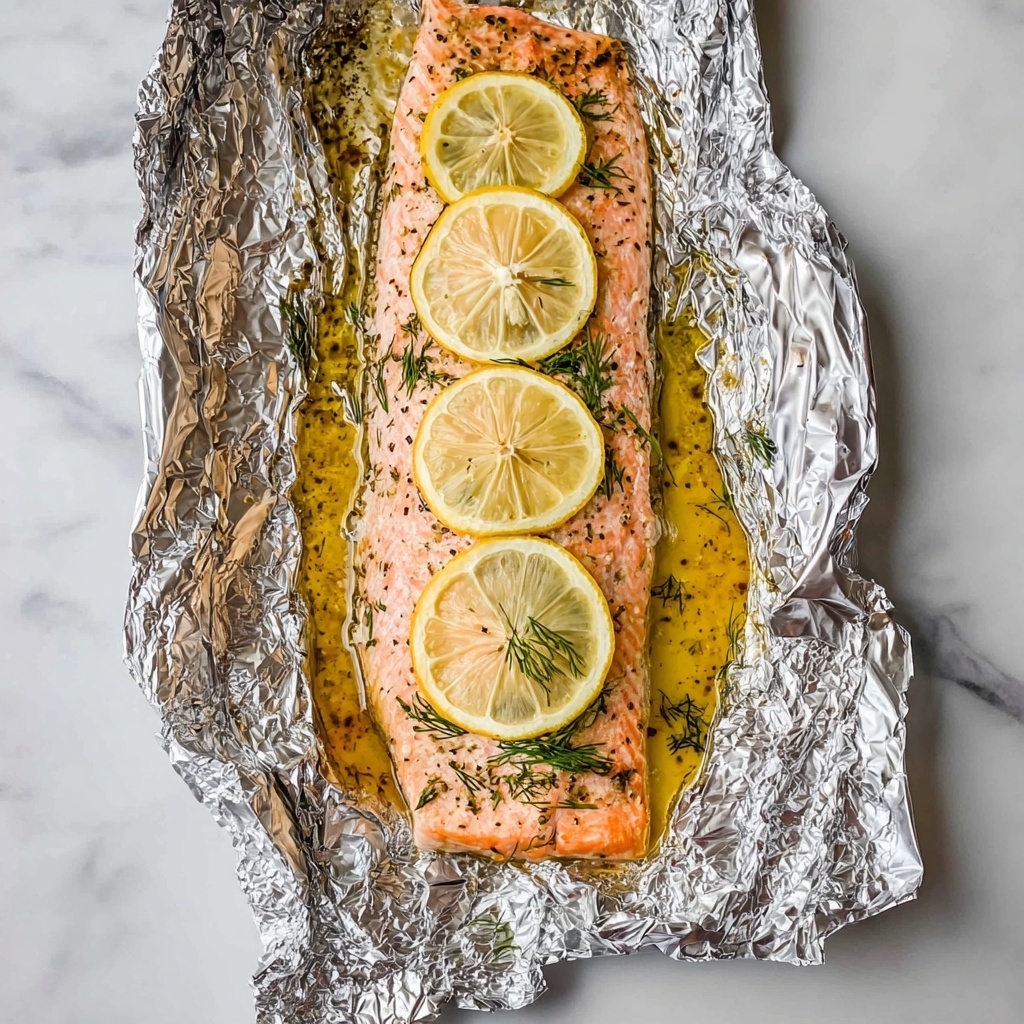
Simple garnishes like a sprinkle of fresh dill or extra lemon wedges elevate the presentation and flavor. Fresh dill adds vibrant green color and a fresh, slightly sweet herbal note that pairs beautifully with salmon’s natural richness.
Side Dishes
Because the salmon itself is quite flavorful and moist, pairing it with light, crisp sides works best. Think steamed asparagus, roasted baby potatoes, or a bright quinoa salad. These sides provide contrasting textures and keep the meal balanced and satisfying without overwhelming your palate.
Creative Ways to Present
Serve the salmon right in its foil packet for a rustic, casual vibe that also keeps things warm longer. Another fun idea is to flake the cooked fish over warm rice bowls or a fresh green salad, transforming leftovers into something new and exciting while still enjoying all those incredible flavors.
Make Ahead and Storage
Storing Leftovers
Leftover salmon should be transferred to an airtight container and refrigerated promptly. It stays fresh for 2 to 3 days, making it easy to enjoy quick meals or snacks after your initial feast.
Freezing
If you want to save your Salmon in Foil Recipe for later, you can freeze it. Wrap it tightly in plastic wrap and then foil or place it in a freezer-safe container to protect from freezer burn. Consume within 1 to 2 months for the best flavor.
Reheating
To reheat, gently warm the salmon in a low oven or covered skillet on the stove. Avoid high heat which can dry it out. Adding a splash of water or lemon juice before reheating helps maintain moistness and fresh flavor.
FAQs
Can I use different types of salmon for this recipe?
Absolutely! While sockeye salmon is delicious with its deep flavor, other varieties like coho or Atlantic salmon work wonderfully too. Just adjust cooking time slightly if your fillet is thicker or thinner.
Is it necessary to broil the salmon after baking?
Broiling adds a beautiful finish and slight crispness to the top. If you prefer softer textures, you can skip this step and simply bake until done, but the difference is worth trying at least once.
Can I add vegetables inside the foil packet?
Yes, adding thinly sliced veggies like zucchini, cherry tomatoes, or bell peppers is a great way to make the meal even more complete. Just be sure to slice them thinly so they cook through in the same timeframe as the salmon.
How can I tell when the salmon is perfectly cooked?
The salmon should flake easily when tested with a fork but still look moist inside. Overcooked salmon tends to be dry and tough, so checking at the 10-minute mark during baking is a good idea.
What if I don’t have aluminum foil? Can I use parchment paper?
You can try using parchment paper, but it won’t seal as tightly as foil, so you might lose some moisture. For best results and ease of cleanup, aluminum foil is preferred in this Salmon in Foil Recipe.
Final Thoughts
There’s something truly special about the ease and flavor of this Salmon in Foil Recipe that makes it a keeper in my kitchen rotation. It’s an effortless way to bring restaurant-quality fish to your table without complicated steps or ingredients. Give it a try, and I promise you’ll find yourself coming back to this recipe again and again for quick, wholesome, and delicious meals.