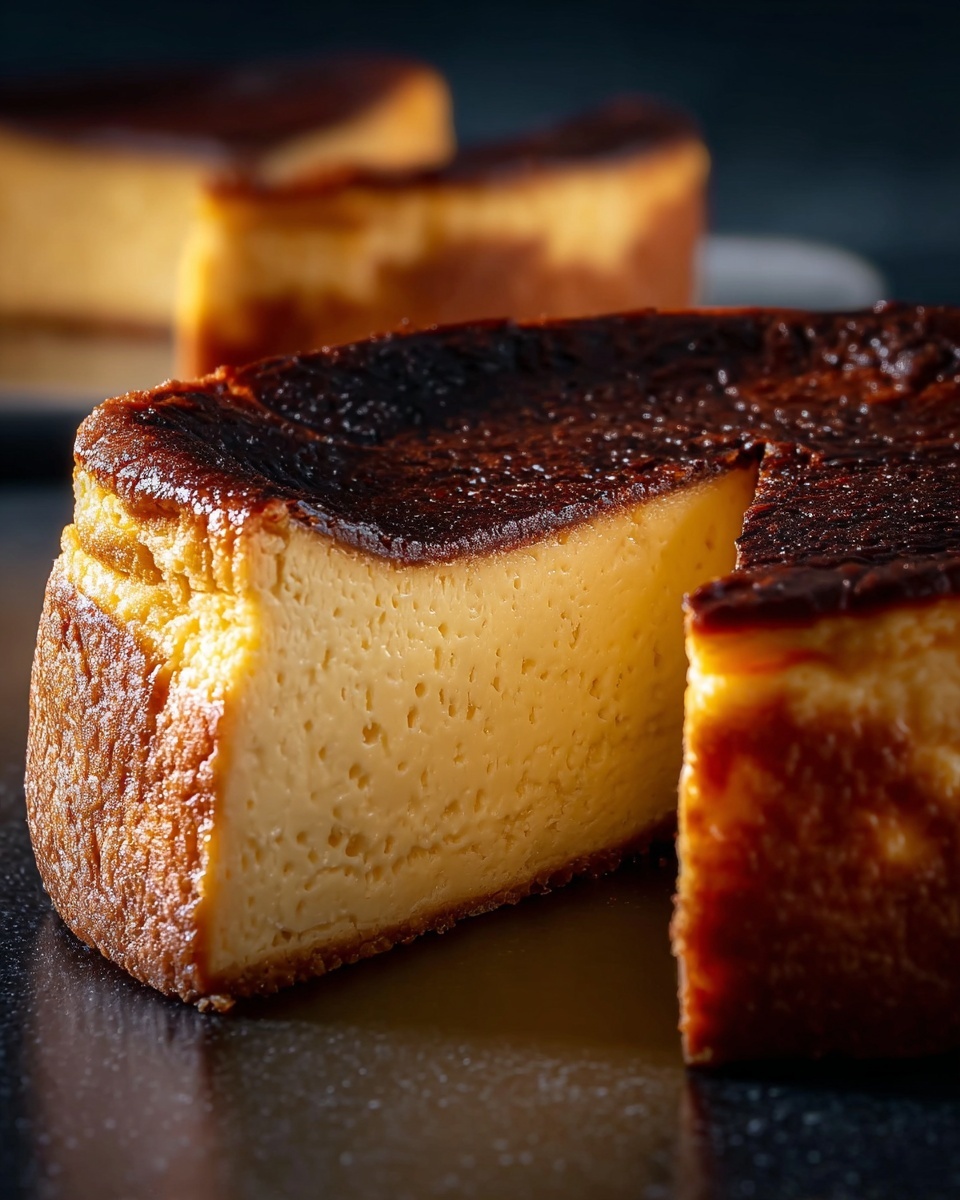
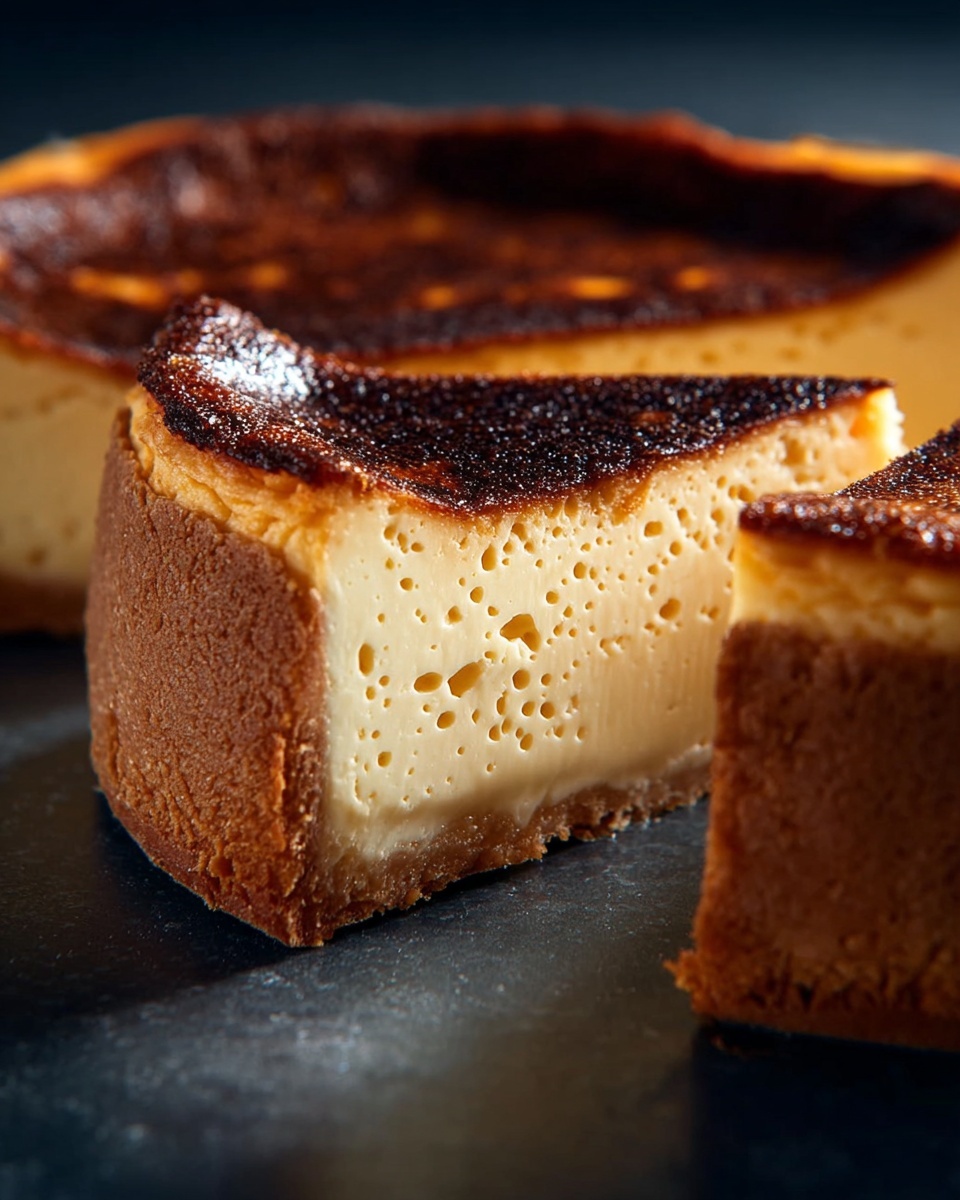
If you have a soft spot for rich, creamy desserts that wow without fuss, this Basque Cheesecake Recipe is about to become your new obsession. Hailing from the Basque region of Spain, this cheesecake offers a perfectly caramelized top with a custardy, smooth interior that’s both indulgent and surprisingly simple to make. The magic lies in its rustic, slightly burnt surface that contrasts beautifully with the luscious, creamy filling inside, delivering a taste experience that feels elegant yet comfortingly homemade. Whether you’re making it for a special occasion or an everyday treat, this Basque Cheesecake Recipe brings a little Spanish sunshine straight to your kitchen.
Ingredients You’ll Need
The beauty of this Basque Cheesecake Recipe is in its simplicity—each ingredient plays a deliciously essential role. Cream cheese provides the rich, creamy base; sugar sweetens without overpowering; eggs give structure and silkiness; heavy cream adds that decadent smoothness; flour gives just enough stability; salt enhances all the flavors; and vanilla extract rounds it all out with a hint of warmth. Let’s look at these little stars that come together to make greatness.
- Cream cheese (2 lbs, room temperature): The main body of your cheesecake, use full-fat for the creamiest texture.
- Granulated sugar (1 1/2 cups): Sweetens perfectly and helps with browning the top.
- Large eggs (6): Add richness and structure, one at a time for best mixing.
- Heavy cream (2 cups): Gives the cheesecake its luscious creaminess and moist texture.
- All-purpose flour (1/4 cup): Stabilizes the batter without making it dense.
- Salt (1/2 teaspoon): Balances the sweetness and enhances the overall flavor.
- Vanilla extract (1 teaspoon): Adds a warm, inviting aroma and depth to the cheesecake.
How to Make Basque Cheesecake Recipe
Step 1: Prep Your Oven and Pan
Start by heating your oven to a scorching 400°F (200°C)—this high temperature is key to developing that signature deeply browned top. Line a 9-inch springform pan with parchment paper, making sure the paper extends well above the rim on all sides. This creates a rustic, freeform edge once baked, a hallmark of this cheesecake.
Step 2: Cream the Cheese and Sugar
In a large mixing bowl, beat your cream cheese and sugar together until the mixture is ultra smooth and creamy. This step sets the stage for a silky texture, so take your time and ensure there are no lumps.
Step 3: Add Eggs One by One
To keep the batter perfectly blended, add the eggs one at a time, beating well after each addition. This slow incorporation helps maintain a smooth mixture and prevents curdling or lumps.
Step 4: Mix in Cream, Vanilla, and Salt
Pour in your heavy cream, vanilla extract, and salt, then gently combine everything until you have a homogenous batter. The cream and vanilla enrich the flavor profile and texture wonderfully.
Step 5: Sift and Add Flour
Sifting in the flour is crucial; it helps avoid clumps and keeps your cheesecake luscious rather than heavy. Blend until you don’t see any lumps, but don’t overmix.
Step 6: Pour and Tap
Pour your batter into the prepared pan and gently tap it on the countertop a couple of times to release any trapped air bubbles. This helps achieve that smooth, custardy consistency inside.
Step 7: Bake Until Perfectly Golden
Bake the cheesecake for about 50 to 60 minutes. You’ll know it’s done when the top is a rich, dark golden brown—almost burnt looking—and the center still jiggles slightly when you nudge the pan. This is the essence of the Basque Cheesecake Recipe’s charm.
Step 8: Cool and Chill
Allow the cheesecake to cool completely at room temperature, then refrigerate for at least 4 hours or overnight. Chilling lets the flavors meld and the texture firm up to that distinctly creamy, sliceable consistency.
How to Serve Basque Cheesecake Recipe
Garnishes
This cheesecake is stunning on its own, but if you want to elevate the presentation, consider topping it with fresh berries, a dusting of powdered sugar, or a drizzle of honey or caramel sauce. A sprinkle of toasted almonds adds a lovely crunch. These subtle additions complement the rich, caramelized flavors beautifully.
Side Dishes
Pair your Basque Cheesecake Recipe with a simple cup of espresso or a glass of dessert wine for an indulgent finish to any meal. Light, fresh fruits like sliced figs or a citrus salad make refreshing accompaniments that balance the cheesecake’s richness.
Creative Ways to Present
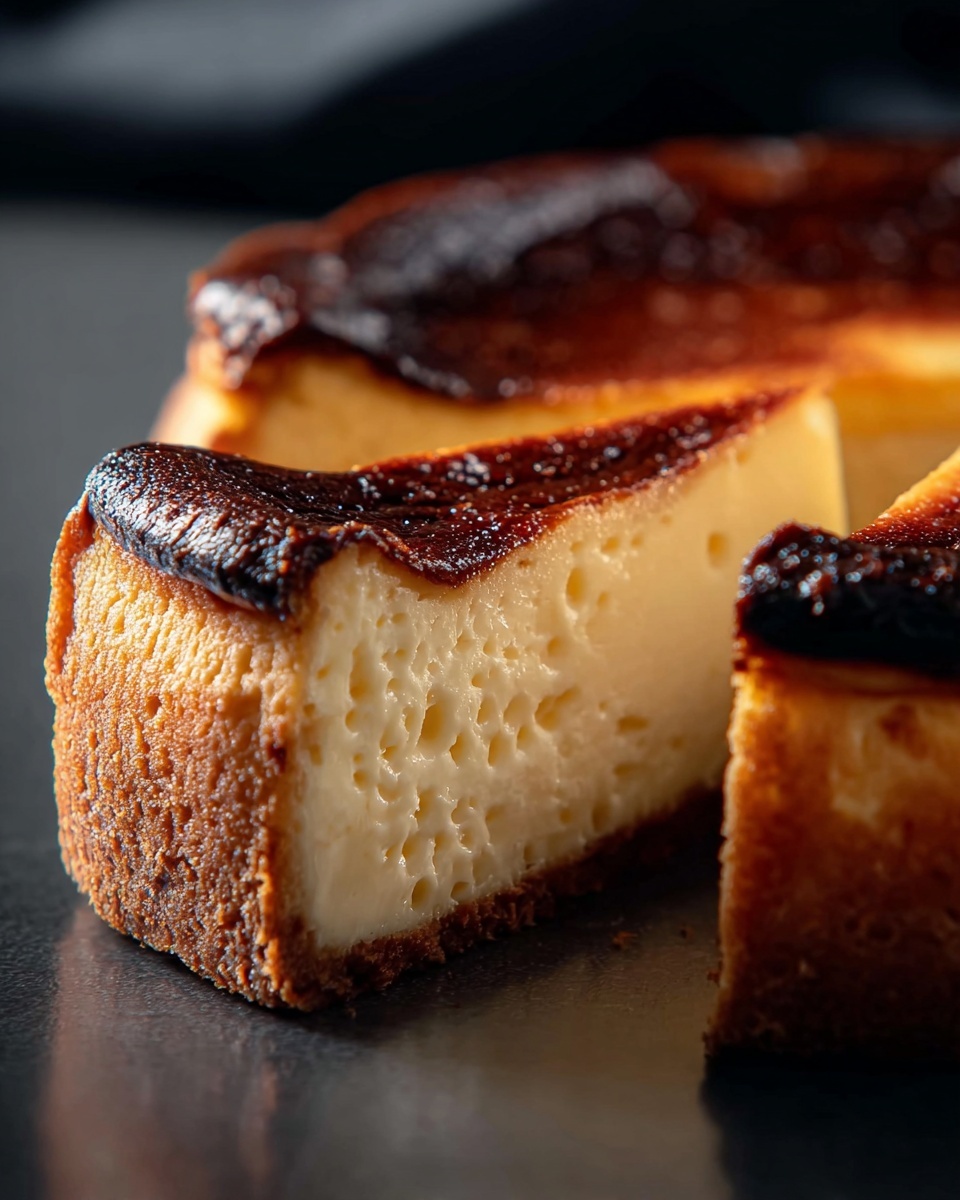
For a fun twist, serve slices with a scoop of vanilla or cinnamon ice cream, or even layer small squares in clear dessert cups with berry compote and whipped cream for individual servings. The distinctive burnt top and creamy filling make for a visually striking dessert no matter how you plate it.
Make Ahead and Storage
Storing Leftovers
Leftover Basque Cheesecake Recipe slices keep wonderfully in the refrigerator for up to 4 days. Store them in an airtight container to prevent the cake from drying out and to keep those luscious flavors intact.
Freezing
You can freeze this cheesecake if you want to prep in advance. Wrap slices tightly in plastic wrap and then place them in a freezer-safe container. They’ll keep well for up to one month. Thaw overnight in the fridge before serving for the best texture.
Reheating
This cheesecake is best enjoyed cold or at room temperature, so reheating is generally not recommended. If you prefer it slightly warmer, let the slice sit on the counter for 15-20 minutes before eating. This helps bring out the creamy flavors without compromising texture.
FAQs
What makes Basque cheesecake different from regular cheesecake?
Basque cheesecake stands out because it is baked at a higher temperature, creating a deeply caramelized, almost burnt top and edges while maintaining a creamy, custard-like center. It’s also less sweet and doesn’t have a crust, giving it a unique rustic appeal.
Can I substitute any ingredients in the Basque Cheesecake Recipe?
For best results, stick to the original ingredients, especially the full-fat cream cheese and heavy cream, which ensure the creamy texture. Substituting lower-fat versions may affect texture significantly. You can try vanilla bean paste instead of extract for a more intense vanilla flavor.
Why does the cheesecake jiggle when it’s done baking?
The slight jiggle in the center signals that the cheesecake is perfectly baked—set on the edges but still creamy inside. It will firm up completely as it cools and chills, so avoid overbaking to keep that delicious softness.
Do I need a springform pan for this recipe?
Yes, a springform pan is highly recommended as it allows you to easily release the cheesecake without damaging its delicate edges. The high sides help the batter rise and develop the signature crusty top properly.
Is the burnt top on the cheesecake supposed to be bitter?
Not at all! The top is caramelized to bring a deep, rich flavor with slight smokiness, not bitterness. If it tastes overly bitter, your oven might be too hot or the cheesecake baked too long. Aim for a deep golden brown color.
Final Thoughts
Giving this Basque Cheesecake Recipe a try is one of those kitchen wins that brings pure joy. With minimal ingredients and straightforward steps, you can whip up a dessert that feels both elegant and homey. Whether you’re sharing it with friends or savoring a quiet slice yourself, it’s sure to become a beloved classic in your baking repertoire. So, warmly embrace this creamy, caramelized delight and let its unique charm brighten your dessert table.
Print
Basque Cheesecake Recipe
- Prep Time: 15 minutes
- Cook Time: 55 minutes
- Total Time: 1 hour 10 minutes plus 4 hours chilling
- Yield: 10 servings
- Category: Dessert
- Method: Baking
- Cuisine: Spanish
Description
A rich and creamy Basque Cheesecake with a caramelized top and luscious interior, baked to perfection for a decadent dessert that’s simple to make and impossible to resist.
Ingredients
Cheesecake Ingredients
- 2 lbs cream cheese, room temperature
- 1 1/2 cups granulated sugar
- 6 large eggs
- 2 cups heavy cream
- 1/4 cup all-purpose flour
- 1/2 teaspoon salt
- 1 teaspoon vanilla extract
Instructions
- Preheat and Prepare Pan: Preheat your oven to 400°F (200°C). Line a 9-inch springform pan with parchment paper, making sure to leave an overhang on all sides to help remove the cheesecake later.
- Beat Cream Cheese and Sugar: In a large mixing bowl, beat the cream cheese and granulated sugar together until smooth and creamy, ensuring no lumps remain.
- Add Eggs: Incorporate the eggs one at a time into the cream cheese mixture, mixing well after each addition for a smooth batter.
- Add Cream and Flavorings: Pour in the heavy cream, vanilla extract, and salt. Mix the ingredients until they are fully combined and the texture is smooth.
- Sift in Flour: Sift the all-purpose flour into the mixture and blend thoroughly until the batter is lump-free and smooth.
- Pour Batter into Pan: Transfer the batter into the prepared springform pan. Gently tap the pan on the counter to release any trapped air bubbles.
- Bake: Bake the cheesecake at 400°F (200°C) for 50 to 60 minutes, or until the top is deeply golden brown and the center has a slight jiggle when you gently shake the pan.
- Cool and Chill: Allow the cheesecake to cool completely at room temperature. Then refrigerate for at least 4 hours, preferably overnight, to set before slicing and serving.
Notes
- Ensure cream cheese is at room temperature to avoid lumps in the batter.
- Do not overbake; the center should jiggle slightly to maintain a creamy texture.
- The parchment paper overhang makes it easier to lift the cheesecake from the pan.
- Refrigerating overnight allows the flavors to develop and improves sliceability.
- Use a water bath if you want a slightly softer texture, but it is not necessary for this recipe.